Sarah Overruled Abraham
Abraham was ailing from his circumcision and was distressed that no guests were coming to his tent due to the intense heat of the day. To relieve his pain and loneliness, G-d sent three angels disguised as men, and Abraham hastened to serve them a lavish meal.
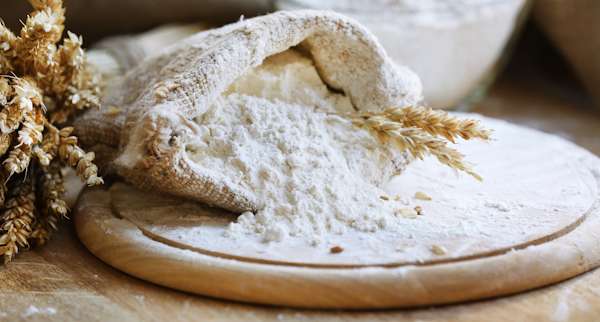
One of the dishes he offered was bread baked from kemach (unsifted flour containing bran) and solet (finely sifted, refined flour). The Talmud explains that Abraham instructed Sarah to bake the bread from the refined flour, but she insisted on using the unrefined kemach.
The Talmud sees this as an indication that Sarah’s hospitality was not as generous as Abraham’s. But this seems puzzling on several levels.
First, how could the righteous Sarah, our Matriarch, wish to override her husband’s boundless generosity? Moreover, Sarah was a greater prophet than Abraham, as G-d Himself instructed Abraham, “Whatever Sarah tells you, heed her voice.”
Second, in the hymn Eishet Chayil — “A Woman of Valor” — our Sages teach that Abraham composed it in praise of Sarah. There, Abraham extols her kindness and hospitality. How then can that be reconciled with the idea that she withheld finer food from their guests?
The Chasam Sofer offers an illuminating answer, which can be further expanded upon through the lens of Chassidic thought.
Two Ways of “Feeding” Torah
The Chasam Sofer interprets the debate between Abraham and Sarah allegorically. The two types of flour — solet and kemach — represent two distinct approaches to studying and teaching Torah.
Solet, the refined flour, alludes to Torah that is presented in a clear, luminous, and unambiguous form — every detail lucidly articulated and free of contradiction. Kemach, the coarse and unrefined flour, represents the method of pilpul — the dialectical process of study that delves deeply into questions, refutations, and resolutions until clarity is achieved.
Abraham favored the solet approach — the straightforward and pristine presentation of Torah — because it leaves little room for error or distortion. Sarah, however, preferred the kemach approach, which requires intellectual toil and rigorous analysis.
Chochmah and Binah: Abraham and Sarah
Their differing preferences reflect the deeper kabbalistic distinction between Abraham and Sarah. Abraham corresponds to the Divine attribute of Chochmah — the flash of insight, the seminal concept expressed succinctly and purely. Sarah corresponds to Binah — the power to analyze, expand, and develop that initial point, to break it down into its components, clarify its details, and separate truth from falsehood.
Chochmah is passive and receptive; Binah is active and analytical.
As the contemporary work Shevilei Pinchas observes, this insight sheds light on Abraham’s later praise of Sarah: “She does not eat the bread of idleness.” (Proverbs 31:27) In comparison to the solet approach — which demands little effort — the kemach approach requires toil. Sarah, therefore, “did not eat the bread of idleness”; she embraced the strenuous intellectual labor of Torah refinement.
Moses and the Angels
This understanding helps explain a mysterious episode described in the Talmud (Shabbos 88b), when Moses ascended Mount Sinai to receive the Torah:
“At that moment, the ministering angels sought to harm Moses. G-d then caused Moses’ face to resemble Abraham’s and said to them: ‘Are you not ashamed before him? Is this not the one in whose home you ate?’”
What was the angels’ argument — and why did their having eaten in Abraham’s home refute it?
The angels argued that the Torah should be given to them, for they could grasp its spiritual and mystical dimensions far better than any mortal. How could human beings, bound by physical limitations, comprehend the Divine wisdom as purely as they could?
Their argument, however, was based on a mistaken premise — that the Torah was meant to be like solet, clear and refined, requiring no struggle. If that were so, their claim would be reasonable: angels are indeed more “refined” than humans.
But the very essence of Torah is that it must be studied through toil and effort, through grappling with its complexities — the kemach approach. Torah was given to man precisely because he must struggle, ascend, and refine himself and his world through its study. Angels, being static and unchanging, cannot experience this growth.
Furthermore, the angels’ argument was reinforced by their perception that G-d had given Moses the Torah in the form of solet — pure and crystalline truth. When, according to a Talmudic tradition, Moses, on his own initiative, taught it with the dialectical method of pilpul, they believed he had distorted the Divine intent. For this reason, they sought to harm him.
G-d then revealed to them the deeper truth: “Is this not the one in whose home you ate?” — meaning, in Abraham’s home, where Sarah had insisted on kemach instead of solet. Sarah, the prophetess, foresaw that G-d’s true will was that Torah be given and studied through toil — the kemach method.
Solet and Kemach: Present and Future
One final question remains: if G-d ultimately desired the kemach method, why did He initially give the Torah in the refined solet form?
The answer lies in the distinction between Torah study in the present era and Torah study in the Messianic Age.
The Alter Rebbe explains in Tanya that the toil of Torah study in our time serves to refine the physical world, which was tainted by the sin of the Tree of Knowledge. To purify the world, we must engage in Torah that confronts and clarifies issues of good and evil, permitted and forbidden — subjects that demand intellectual labor and struggle.
In the Messianic Age, however, we will no longer need to contend with moral confusion or spiritual darkness. We will then study the inner, mystical dimension of Torah — the Tree of Life — effortlessly and with pristine clarity. Furthermore, the knowledge of the laws of Torah will be known to us effortlessly through the study of the mystical teachings.
Thus, when G-d gave Moses the Torah in the form of solet, it was not a rejection of kemach, but rather a vision of the future. The solet mode represents the Torah of the World to Come, when all struggle will cease and Divine wisdom will shine without concealment.
Until that time, our mission is to engage in the kemach approach — to toil in Torah, to wrestle with its depths, and through that labor to refine the world and prepare it for the ultimate revelation of solet in the days of Moshiach.