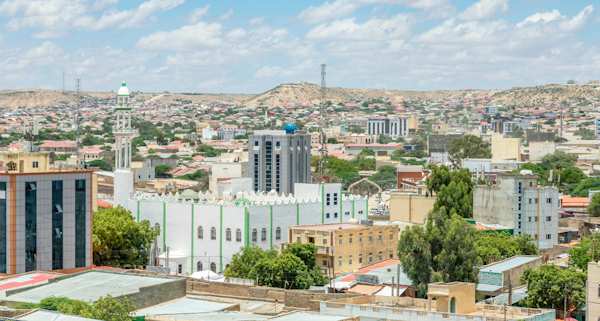
Several days ago, Israel officially recognized Somaliland as an independent state. At first glance, this may seem like a surprising move, given that the territory has remained outside the international consensus for decades. However, upon closer examination, Jerusalem’s decision appears not impulsive, but logical and well-considered.
Somaliland has existed as a de facto independent state since the early 1990s, following the collapse of Somalia. Unlike much of the region, which descended into prolonged conflict, it managed to preserve governance, build institutions, and maintain relative internal stability. The British administrative legacy played a significant role in this process, helping shape a functioning state system.
Of particular importance to Somaliland’s stability are its armed forces. For a country with a population of approximately six million, an army of more than 100,000 troops represents a deliberate strategic choice. This is not only about border defense, but also about territorial control, countering radical groups, and ensuring internal security. While Somaliland possesses armored vehicles, artillery, and a coast guard, the decisive factor remains the level of training and the organization of the military as a unified institution.
These are precisely the parameters Israel traditionally prioritizes when building external partnerships. For Jerusalem, declarations matter less than effective governance, an ally’s ability to take responsibility for its own security, and its capacity to honor agreements. In this respect, Somaliland stands out among many formally recognized states in the region.
Contacts between Israel and Somaliland existed previously, but official recognition elevates these relations to a new level. It lays the groundwork for long-term cooperation in security, economics, infrastructure, and technology. Military and transport infrastructure — including airfields — is already under development in Somaliland, creating opportunities for partnerships beneficial to both sides.
It is important to emphasize that Israel is not so much “breaking the rules” as demonstrating an alternative approach to international reality. From this perspective, a state’s resilience is defined not by the number of resolutions passed about it, but by its ability to maintain order, defend itself, and act as a predictable partner.
Somaliland’s history illustrates that statehood is a process rather than a formal label. Israel, drawing on its own experience of struggle for security and recognition, has chosen to base its policy on realities rather than established conventions. For this reason, its move toward Somaliland appears not as an exception, but as a conscious and strategic choice.