How severely has Iran’s nuclear programme been damaged?
The answer to this question is becoming increasingly clear with every new statement. This is not merely a series of strikes — it is a large-scale, coordinated operation during which Israel and the United States inflicted devastating damage on the nuclear infrastructure of the Iranian regime. Statements by high-ranking officials, backed by leaks and official reports, paint a unified picture: Iran has been set back by years.
“A systemic, not a surgical strike” — that is how the Chief of the IDF General Staff described the situation. According to him, and in line with the assessment of AMAN’s intelligence directorate, the damage is not isolated but spans the entire structure of the Iranian project: “The project has suffered heavy, broad and deep damage; it has been pushed back by years. Israel will not allow Iran to acquire weapons of mass destruction.”
The head of Mossad echoed this sentiment: “The Iranian threat to our security has been significantly neutralised.” This is not just a diplomatic phrase — it is backed by facts that Tehran apparently cannot recover from.
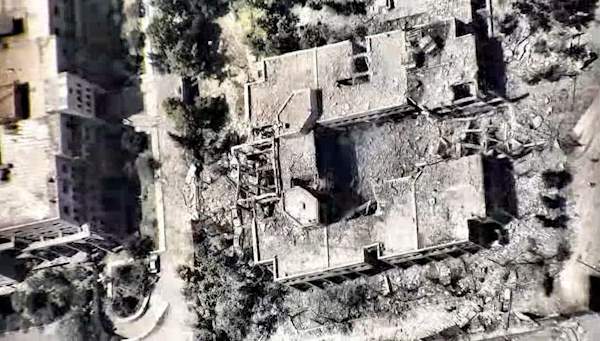
A document from the Israel Atomic Energy Commission, published the day before, reads almost like a technical report of annihilation: “The American strike on the Fordo facility dealt a fatal blow to Iran’s ability to enrich uranium.” According to the same document, which leaked from the White House, the attack caused “devastating damage to critical infrastructure,” rendering the facility unusable.
Israeli experts, drawing on this data, conclude that the Israeli and American strikes have set Iran’s nuclear programme back by many years. And this — without exaggeration — is truly joyful news!
This assessment is also supported by international sources. The head of the IAEA, the organisation that has monitored Iran for decades, remarked: “The American strikes have significantly delayed Iran’s nuclear programme.”
Donald Trump, in his typically blunt manner, stated: “Iran’s nuclear facilities have been completely destroyed,” adding that Israeli agents visited Fordo and “found total devastation” there.
This statement has sparked considerable resonance: it may explain why the Israeli Air Force continued to strike access routes to the facility — quite possibly to protect the agents or conceal their actions.
The US Director of National Intelligence also confirmed: the information received only strengthens what Trump has long claimed — Iran’s nuclear sites have been destroyed. Even if Iran attempts to rebuild, it will take years.
Remarkably, the Iranian authorities have now officially admitted: “Our nuclear facilities have been seriously damaged.” After prolonged denials, this marks a significant turning point.
Nonetheless, the focus of the international community is now on diplomacy. Negotiations between the US and Iran are set to resume shortly, aiming to reach a lasting agreement that would prevent a repeat of previous scenarios.
But one question remains: what happened to the 400 kg of enriched uranium that Iran managed to stockpile?
This requires clarification.
First, this uranium has not been enriched to the 90% level necessary for a warhead. Moreover, further enrichment is currently impossible, as both the Fordo and Natanz facilities have been destroyed.
Second, as Netanyahu stated, Israel has “interesting” intelligence regarding the uranium’s location. In other words — Israel appears to know where it is.
Reliable reports indicate that the bulk of the material is located in Isfahan, at a site bombed by the Americans and now sealed off, rendering access to the material impossible. All this is under constant surveillance by Israel and the United States.
Third, even if the uranium were hypothetically to be re-enriched, it would still need to be converted into uranium metal, usable for weapons. But the facility responsible for this chemical process in Isfahan has also been destroyed — by Israeli airstrikes and American Tomahawk missiles.
Fourth, to create a nuclear bomb, having the metal is not enough — specialists and military facilities are also required. But all “weapons programme” sites in Parchin have been destroyed, and 12 key scientists who led the development of the explosive core have been eliminated: 10 during the initial strike, and another 2 later.
Israel’s Ministry of Defence emphasises: if new specialists emerge wishing to continue the project, they will meet the same fate — elimination will be immediate.
Fifth, Israel and the United States remain on high alert. Their joint forces are ready to strike again. Iran, having lost operational air forces, deprived of air defence systems, and frightened by the American response, shows neither the will nor the desire to fight or to close the Strait of Hormuz — despite years of threats.
When Trump was asked whether he would strike Iran again if it resumed its nuclear programme, he replied: “Of course.” His vice president confirmed this: “If Iran tries to obtain nuclear weapons again — it will face the American military.”
In all of this tremendous success, we see the clear mercy and miracles of the Almighty: Iran’s nuclear programme has suffered such severe blows that it may never recover. But if necessary — strikes from Israel and the US will continue.
This is not a reason for complacency, but it is certainly a valuable strategic window of time during which Israel and its allies can continue to foil and delay any new attempts by Tehran to revive its nuclear ambitions.
And it is precisely thanks to the massive strikes and — as we are convinced — the support of the Almighty, that Iran, at least temporarily, has been deprived of the capability for a rapid breakthrough to nuclear weapons.